
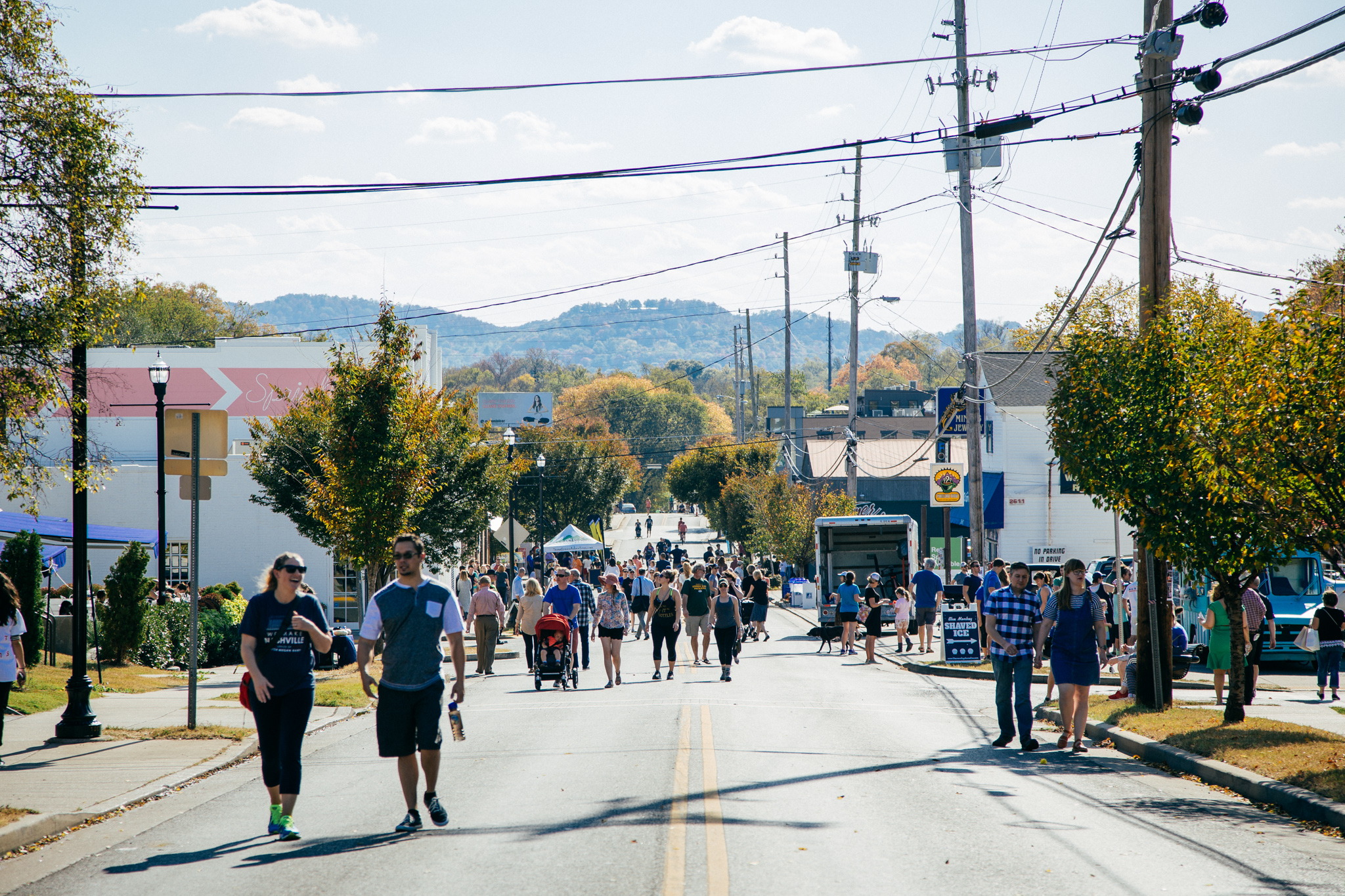
Strategic Framework
We all want better streets.
Those aren’t just words — a 2024 survey of over 10,000 residents by Imagine Nashville found that “It’s hard to get around” is the top negative aspect of our city. Unlike other issues named, there was unanimity across all neighborhoods, races, and income levels about the need for mobility to connect neighborhoods to other parts of the city.
At Walk Bike Nashville, we’ve been leading the charge for better streets for over 27 years through tireless advocacy and programs like Tour de Nash, Walk to School Day, and Open Streets Nashville. It’s a pivotal time for our city and our organization; in the past five years, Nashville has gained a department of transportation, a former Walk Bike Nashville board president became our Mayor, and we’ve won a hard-fought battle for dedicated transportation funding. Our membership has also doubled.
But how do we actually make better streets? What should our priorities be going forward? And how can we invite more members into our movement?
We’ve spent the past year asking those questions. As we head into 2026, we want to share our vision for the future through our Strategic Framework.
What do we want to do?
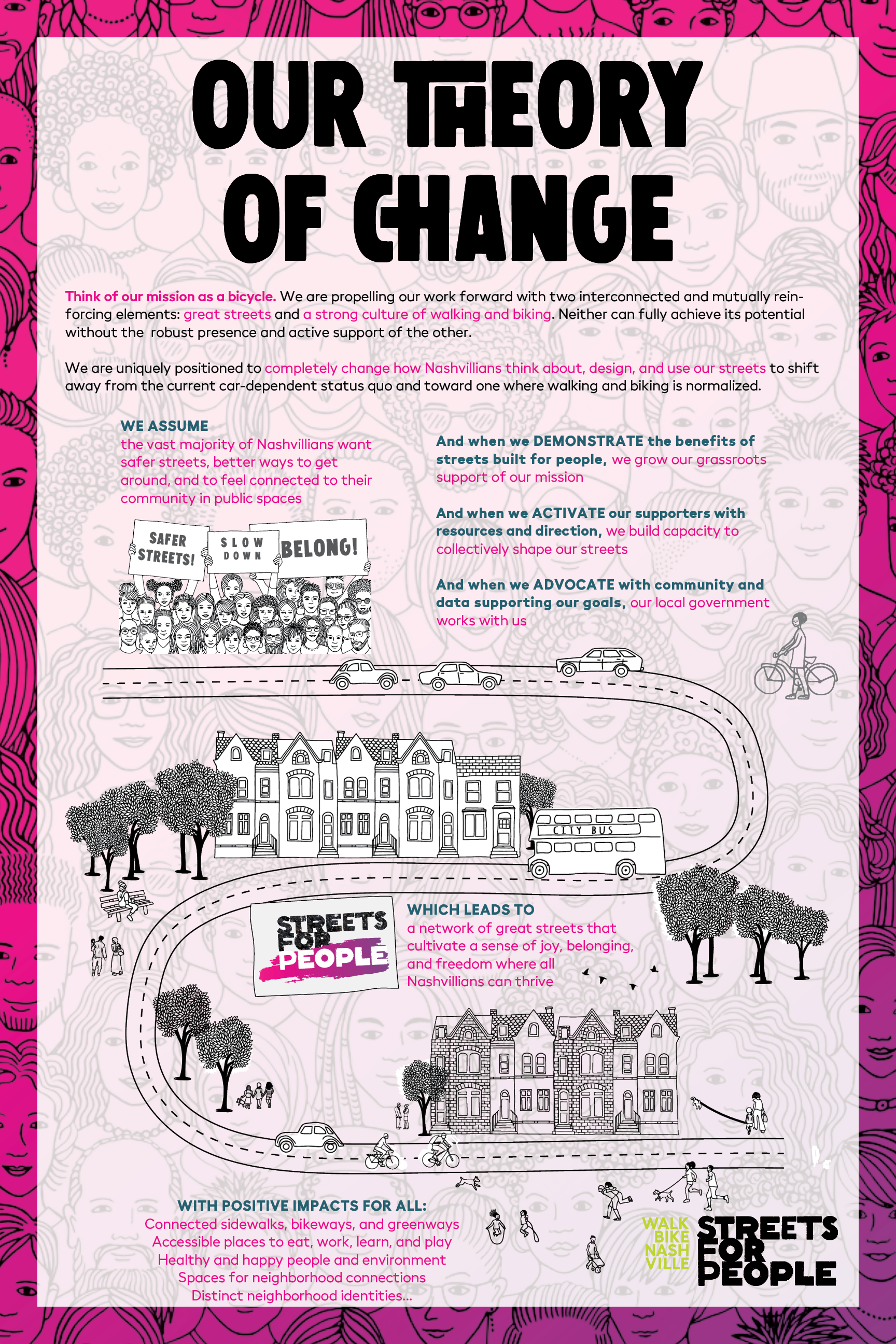
Our Strategic Framework guides everything we do. It outlines our main Goals: to create great streets and to cultivate a strong culture of walking and biking. These broad Goals help us identify specific Approaches to making change and maximize our impact across the city.
Great Streets: Advance Streets for People Infrastructure
For a century, transportation planning in Nashville, and most American cities, has prioritized the movement of cars over all other modes and street functions. The result is a built environment that often threatens our safety and is detrimental to our health, especially for our most vulnerable road users: people walking and biking. It’s time for us to change the way our streets are built.
Approach 1: Proactively influence government-led initiatives from a Streets for People perspective
With the passing of Choose How You Move and other plans such as Vision Zero, WalkNBike, and Connect Downtown, there are more government-led transportation projects, programs, and policies in the pipeline than ever before. Because these represent opportunities for our city to build out our walking and biking network, we must advocate for change, track initiatives, and hold decision makers accountable to leveraging these investments in a people-centered way.
Approach 2: Empower community members to address neighborhood-level needs for our streets
While the government plays a vital role in shaping our streets, progress is slow and it is often ineffective to wait for the change you want to see. There are programs and resources available for community members to initiate their own Streets for People projects that increase walkability, bikeability, and livability at a neighborhood level, but most people are unaware of these opportunities, or lack the resources to take advantage of them. With experience in neighborhood projects and knowledge of the local transportation landscape, we are uniquely positioned to support others through the change-making process. By activating others, we not only arm neighbors with lasting tools to own the work, we also build our own capacity and impact.
Strong Culture: We cultivate the Streets for People mindset.
In addition to physically transforming our streets, we are also working to shift the culture — changing the way Nashvillians think about and interact with our streets. The current car-centric culture makes it hard to recognize streets as our largest form of public space. We are leading a paradigm shift for people to see our streets in a new light.
Approach 1: Display our mission in-action through our events and installations
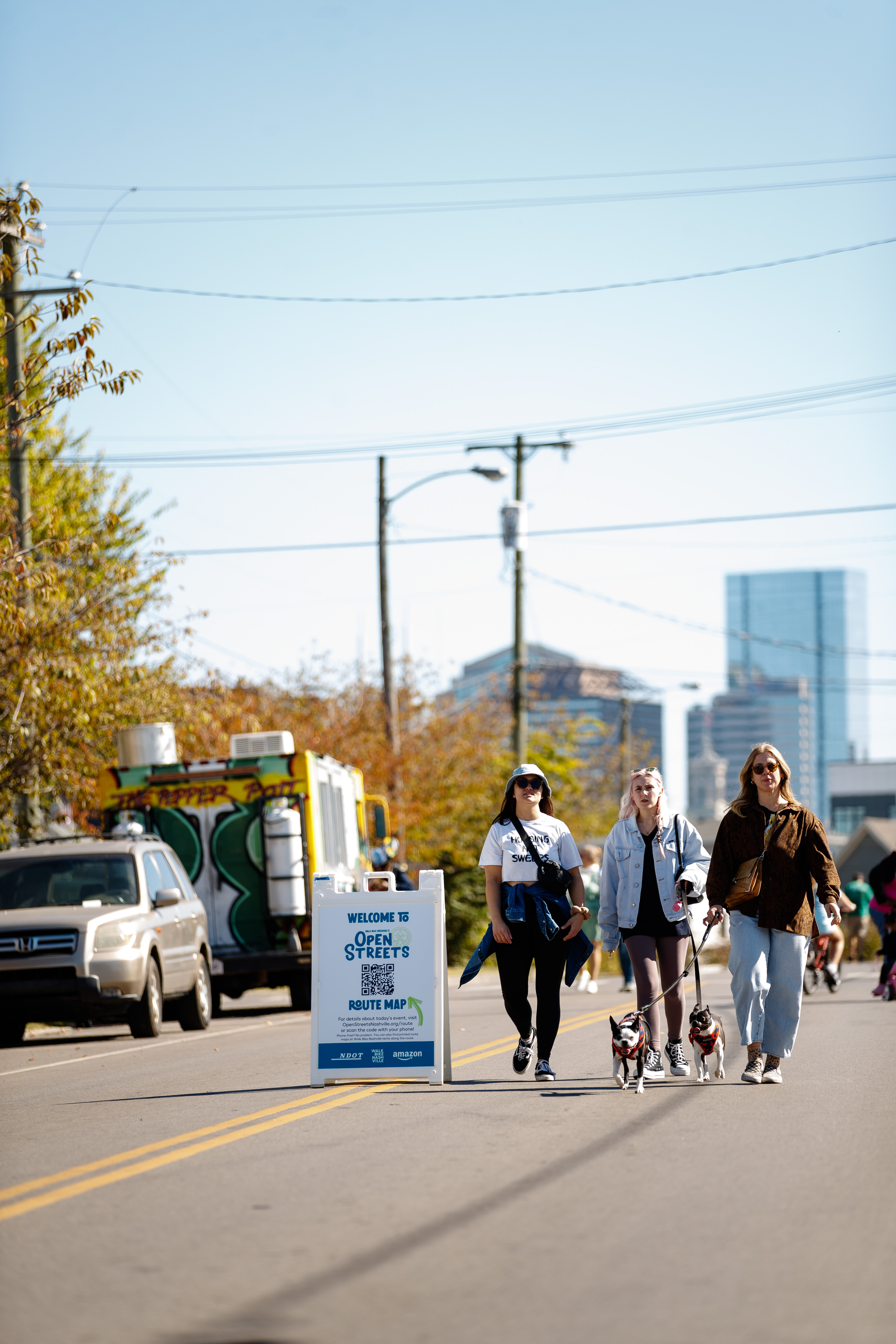
With few existing streets built for people in Nashville, we have to demonstrate the concept through events and installations. Tour de Nash attracts more than 1,000 people to ride bikes together each May. The Open Streets Summer Series connects closed streets and greenways to demonstrate a connected network of safe streets through downtown. Neighborhood block parties foster a sense of community and provide safe places for kids to play in the street. By temporarily transforming these public spaces, we are able to take people out of their car-centric mindset so they can begin to see, feel, and normalize our Streets for People vision.
Approach 2: Display our mission in-action through our communications
A narrative that generates a sense of possibility is also a powerful tool in this paradigm shift. When we provide context, we can paint the picture of why our streets look the way they do. When we point to case studies in peer cities, we can demonstrate how better streets connect communities, fuel a healthy economy, and foster independence for people of all ages and abilities. And when we shine a light on local success stories, we help generate public trust and an appetite for more walking and biking infrastructure. We can tell these stories through a variety of mediums, including social media, long-form blog posts, and video content.
What are we working on right now?
Each of our approaches helps us set practical, measurable Objectives — in other words, what we’re actually working on day-to-day. Unlike our Goals and Approaches, which provide a consistent foundation for our work, these Objectives change regularly as we achieve success and move on to new priorities. We'll provide updates annually to track our progress and keep our members informed about our work.
Here’s a sample of what we’re working on right now…
Approach: Proactively influence government-led initiatives from a Streets for People perspective.
We will establish an Advocacy Committee to build our capacity for carrying out our annual advocacy agenda and track additional walkability and bikeability issues.
We will advocate for and track the progress of our current advocacy priorities as described in the inaugural State of Our Streets report.
Approach: Empower community members to address neighborhood-level needs for our streets.
We will draft a neighborhood playbook that establishes best practices and compiles case studies for our neighborhood-level engagement.
Approach: Display our mission in action through our programs, events, and installations
We will host the Open Streets Summer Series and launch the Open Streets Community Guide & Toolkit to demonstrate a connected network of safe streets and normalize our Streets for People vision.
We will host Walk to School Day to encourage transportation mode shifts for school trips and demonstrate the importance and joy of having safe routes to school.
We will provide bike valet at home Nashville Soccer Club matches and Titans games to encourage biking and we will continue our Walk Bike QuickTicket program to make taking the bus an affordable option.
Approach: Display our mission in action through our communications
We will establish a communications plan to illustrate our vision with content that provides context for why our streets look the way they do, case studies showing the benefits of existing streets for people, and local success stories.
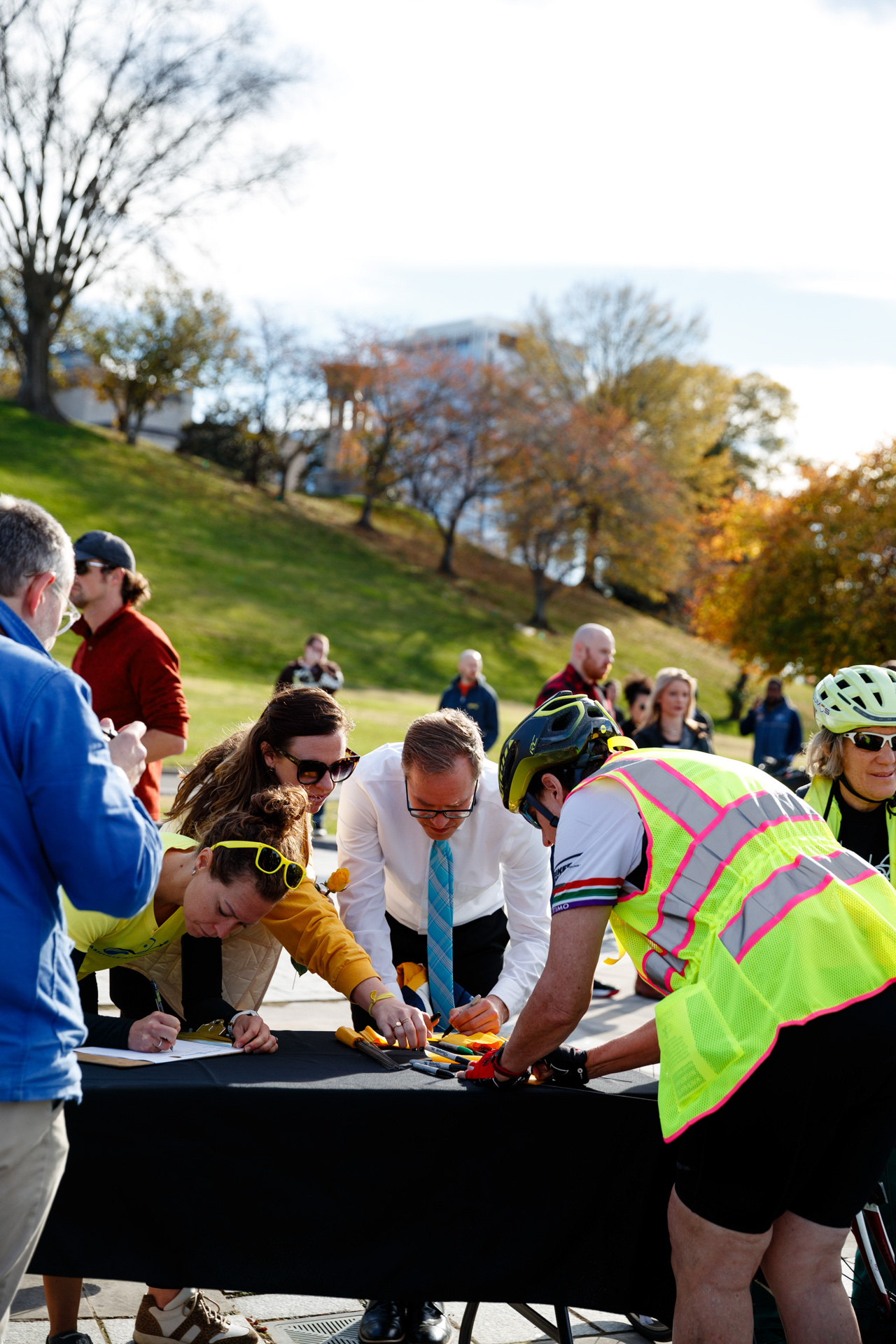
We will Host World Day of Remembrance with Families for Safe Streets to cultivate care for victims of traffic violence.
Want to join us?
Our members make our work possible. Join today as a paid member or a free community member for perks including:
- Discounted WeGo Transit QuickTicket passes
- Half price Nashville BCycle rentals
- Discounts on Walk Bike merch and Tour de Nash registration
- Tickets to our annual Member Party
- Annual Walk Bike Nashville sticker
- Exclusive Walk Bike Nashville updates
Do you like this page?